
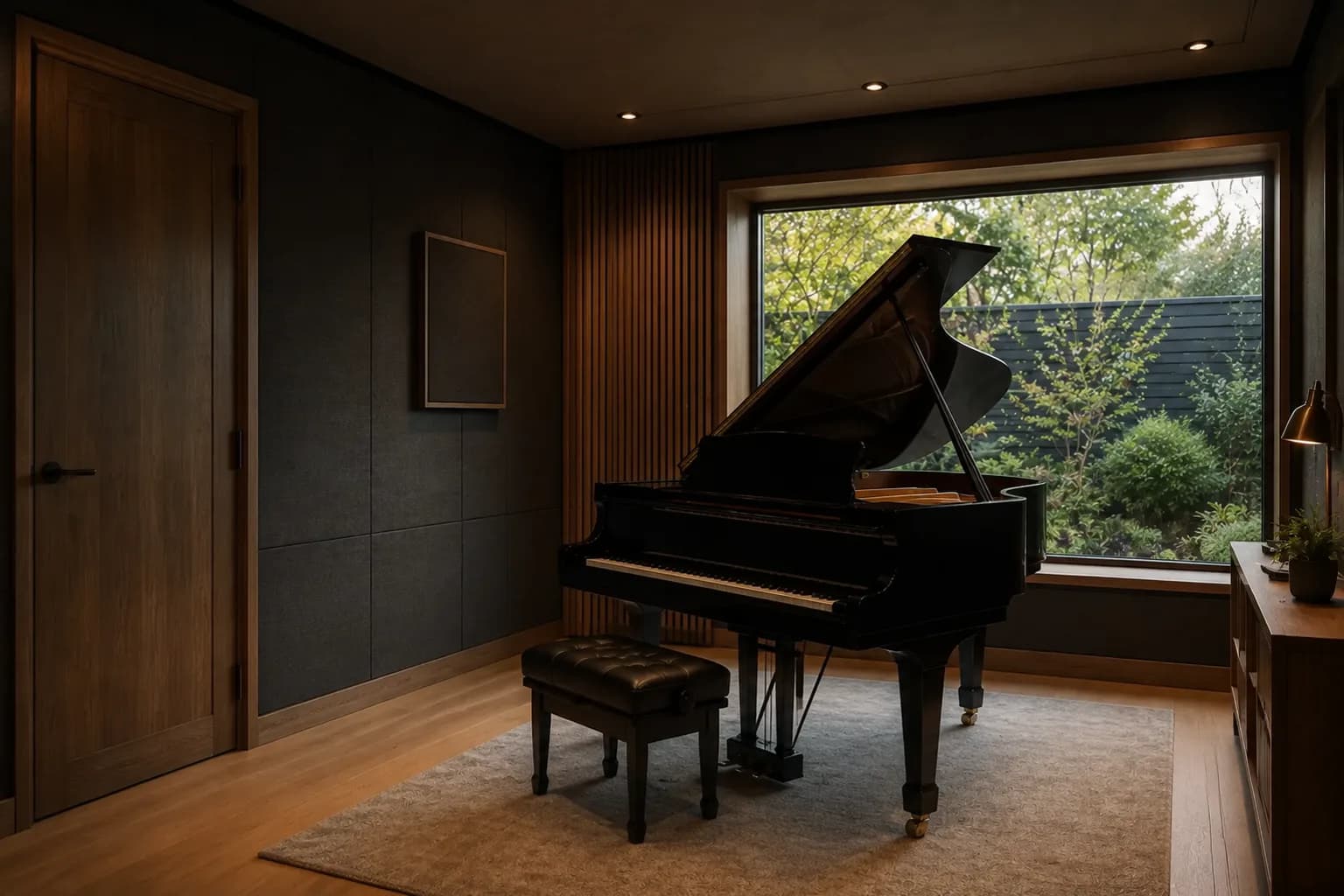
What a Piano Does to a Floor
The weights are larger than most people expect and they are not ordered the way people expect either. A Steinway concert grand is 483 kg. Their smallest baby grand is 263 kg. Their traditional upright is 295 kg, so an upright can comfortably outweigh a baby grand while taking up a fraction of the floor area.
The distributed load is not the issue. Spread a concert grand across its own plan area of roughly 2.7 by 1.6 metres and it works out at around 1.1 kilonewtons per square metre, which sits inside the 1.5 kilonewtons per square metre that the Eurocode assigns to residential floors. The concentrated load is the issue. A grand stands on three legs, so that 483 kg arrives through three castors at roughly 160 kg each, which is about 1.6 kilonewtons through a contact patch the size of a coin.
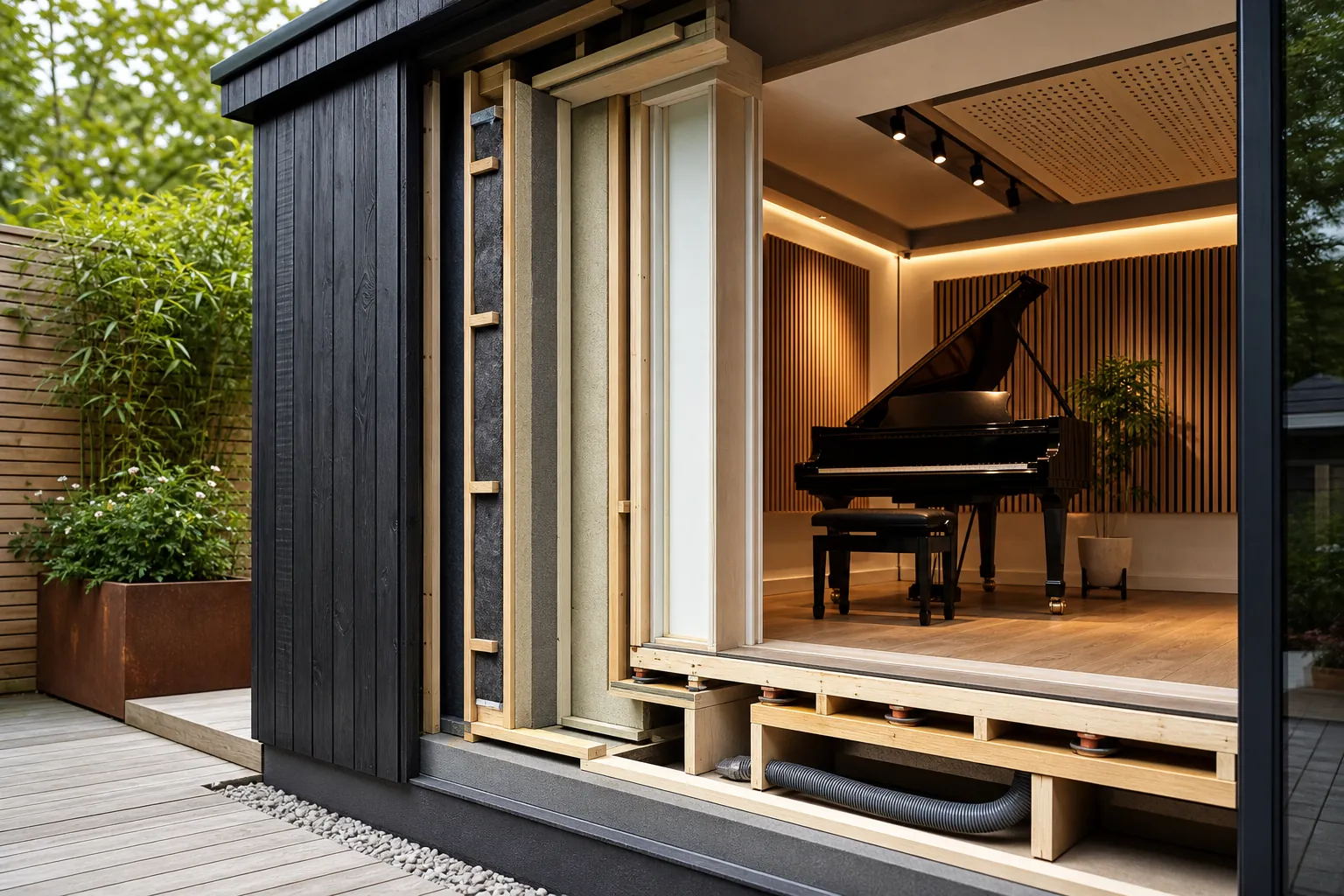
For comparison, the same Eurocode checks residential floors against a concentrated load of 2 kilonewtons applied over a 50mm square, which is close to a castor footprint. A concert grand sits inside that check with very little margin, and a suspended timber deck has deflection and vibration behaviour that a code check does not describe at all. This is why a piano room starts with the floor build up rather than the walls, and why the base specification is decided before the instrument is chosen rather than after it arrives.