
London GardenMusic StudiosLondon Garden Music Studios

Garden Podcast and Voiceover Studios

Garden podcast and voiceover studios engineered for a controlled noise floor and a dry, close-mic sound.

Discuss your studio
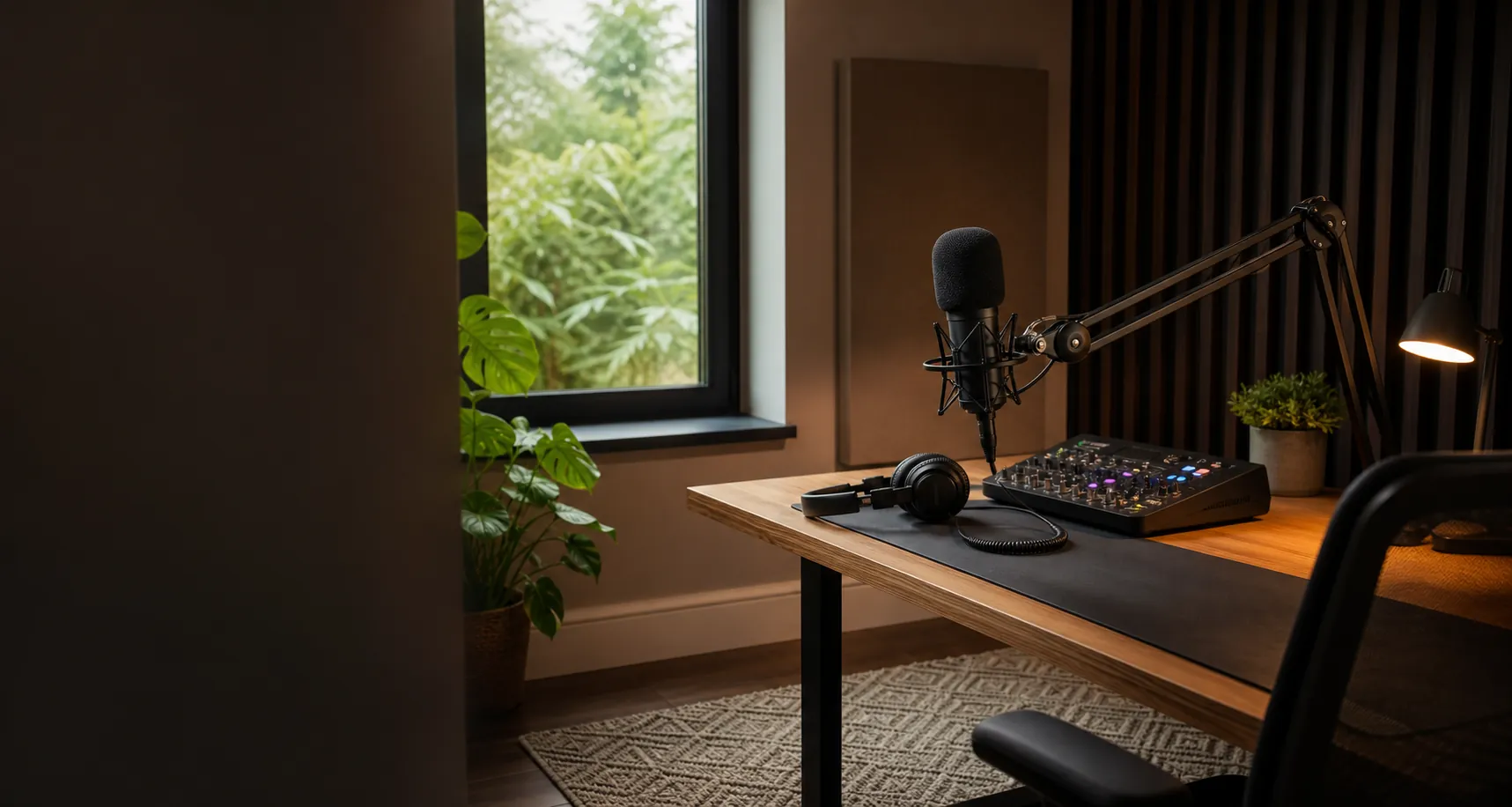
A compact voiceover and podcast studio with broadcast microphones

Recording a podcast or a voiceover is not about keeping sound in, in the way a drum kit or a full band is. A close mic on a voice picks up almost everything around it: aircraft passing overhead, traffic on the road outside, rain on a roof, and the hum of a fridge or a ventilation unit in the next room. The design target for a garden podcast studio is a very low, controlled noise floor rather than raw isolation from loud volume.

We build these rooms around that difference. Isolation from outside noise still matters, particularly against traffic and aircraft, but the bigger design job is often internal: a quiet ventilation system, a room shape and internal treatment that gives a dry, close-mic sound without sounding dead, and enough desk space and cable routing for the way people actually record now, which increasingly includes video alongside audio.

Whether the room is a single-person voiceover booth or a two-guest podcast room changes the brief considerably, and we design each one around exactly how it will be used rather than a single generic template.

The acoustic challenge

Speech recording is a different problem from playing an instrument loudly: the enemy is what is already in the room rather than what needs to stay in it, so the design target is a very low, controlled noise floor and a dry, close-mic sound rather than escaping volume.

Understand acoustic performance
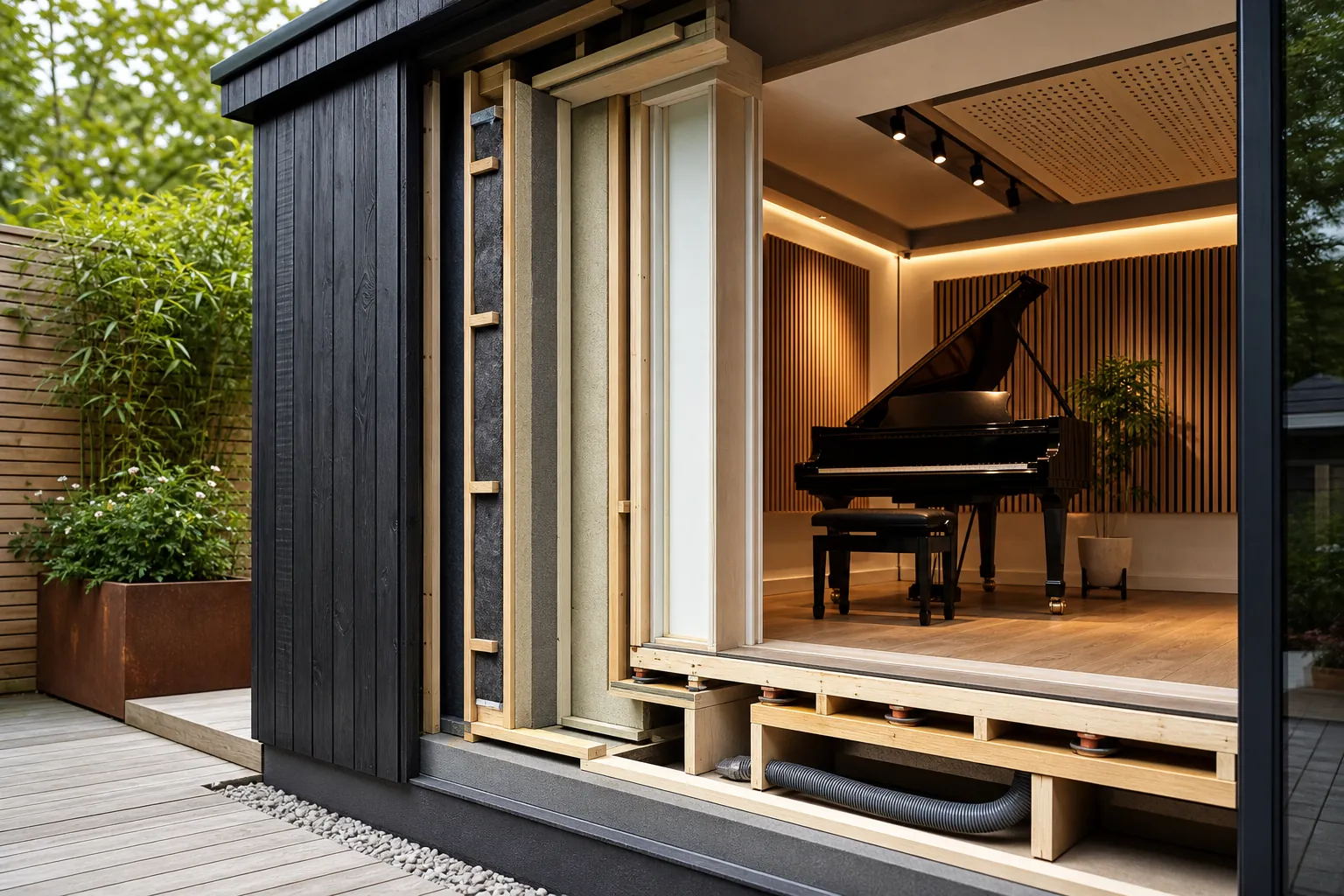
Cutaway view showing the independent inner structure of a soundproof garden studio

Podcasters, Voiceover Artists And Creators

Podcasters are the largest group asking for this, ranging from a solo host recording a weekly show to a two or three person format that needs guests in the room together rather than over a call. Voiceover artists are the other core audience, often working to tight client deadlines where a controlled, repeatable recording environment matters as much as the room's sound.

Content creators and remote broadcasters use the same room differently again, often recording video alongside audio and needing to be on camera and reliably online for a call or a live segment, which brings lighting, camera position and a stable internet connection into the design conversation alongside acoustics.

What most of these users share is wanting to record at any hour without worrying about a barking dog next door, a delivery van outside, or whoever else is home, which a garden studio solves in a way a spare room in the house rarely can.

Noise Floor Rather Than Escaping Volume

Playing loud is not the problem here, so the acoustic brief is almost the reverse of a drum or rehearsal room. The job is keeping outside noise out rather than keeping recording noise in, which means paying close attention to aircraft flight paths, road traffic and anything mechanical near the room, including a garden studio's own ventilation system, since a badly specified unit can introduce exactly the low hum a close mic will pick up.

Inside the room, the goal is a dry, controlled sound rather than a dead one. Too little treatment and a small room sounds boxy and reflective on a close mic. Too much, and flat, absorbent surfaces everywhere make a voice sound lifeless and tiring to listen to. Acoustic glazing and doors handle the airborne isolation, while internal treatment on walls and ceiling shapes how the room actually sounds rather than just how quiet it is.

Getting this balance right matters more for speech than for music, because a listener notices a bad noise floor or a harsh room on a podcast far more readily than on a mixed piece of music, where other elements can mask a flaw.

Booths, Podcast Rooms And Layout

A single-person voiceover booth can be genuinely compact, built primarily around one desk, one chair and enough space that the mic is not too close to a hard reflective surface. A two or three guest podcast room needs considerably more floor area, both for the extra people and for the acoustic treatment to work properly at that scale without feeling cramped.

Desk layout and cable routing are worth designing in properly rather than adding after the room is finished, particularly if the room needs to support video recording as well as audio, since camera position, lighting and background all compete for the same wall space as acoustic treatment.

Many podcasters and creators also use the room for other work between recording sessions, including audio editing, client calls and planning, which is worth mentioning at the design stage since it affects desk space, power and how the room is laid out day to day.

London Realities, Access And Planning

London brings its own noise sources into this conversation: flight paths across large parts of the city, busy roads, and a lot of close-together housing where a neighbour's boiler or extractor fan can end up audible on a sensitive mic. None of that is a reason not to build, but it is worth surveying honestly before a design is finalised rather than discovered after.

Most single-storey garden studios fall under permitted development, subject to the usual height and coverage limits, provided the use stays personal or incidental to the household. Flats and maisonettes have no permitted development rights for outbuildings at all, so a garden studio at a flat always needs a planning application, regardless of how quiet the finished room is.

Access matters for build cost more than for day-to-day use here, since a podcast studio is usually a lighter structure than a drum or band room, but getting equipment, cabling and a desk through a narrow side return still needs planning at the design stage.

Cost Drivers And Your Next Step

Cost is driven by the ventilation and glazing specification more than by raw size on this type of room, since a quiet, well-controlled noise floor depends on acoustic doors, acoustic glazing and a properly attenuated ventilation system rather than simply adding mass to the walls.

Whether the room needs to support video, how many guests it needs to seat, and how much desk and storage space you want all shape the final specification and are worth deciding before a design is drawn up rather than after.

Tell us how you record, who joins you and what your garden allows, and we will give you an honest view of feasibility and the right next step.

Common questions

The practical details people usually need before deciding whether a garden studio is viable.

How quiet does a garden podcast studio need to be?

Quiet enough that background noise does not show up on a close mic, which is a lower and more demanding bar than most people expect. Aircraft, traffic, rain on the roof and even a badly specified ventilation unit can all be picked up by a sensitive microphone well before they would bother someone simply sitting in the room.

Do I need planning permission for a garden podcast studio?

Usually not, provided the studio stays within permitted development height and coverage limits and the use remains personal rather than a separate commercial operation with regular visitors. Flats and maisonettes are the exception, since they have no permitted development rights for outbuildings and always need a planning application.

What is the difference between a voiceover booth and a podcast room?

A voiceover booth is typically built for one person and can be genuinely compact, designed around a single desk, chair and mic position. A podcast room needs to seat two or three guests comfortably and needs more floor area for the acoustic treatment to work properly at that scale, which changes the size and layout of the build considerably.

Will aircraft or traffic noise still be audible in a garden studio?

Good isolation reduces it substantially, but a garden studio cannot remove outside noise entirely, and central London flight paths and busy roads are a real factor worth surveying honestly before a design is finalised. Acoustic glazing and doors do most of that work, alongside careful attention to any gaps or vents in the structure.

Can a garden podcast studio be used for video as well as audio?

Yes, and it is worth telling us at the design stage if that is the plan, since camera position, lighting and background compete for the same wall space as acoustic treatment. Desk layout, cable routing and power all need to be planned around video from the outset rather than added as an afterthought later.

Make the room fit the work.

Tell us what you want to record, how you work, and what your garden allows. We’ll start with the constraints that actually shape the room.

Request an assessment