
London GardenMusic StudiosLondon Garden Music Studios

Garden Music Teaching Studios

Garden teaching studios designed around a working teaching day, with honest advice on planning for home tuition.

Discuss your studio
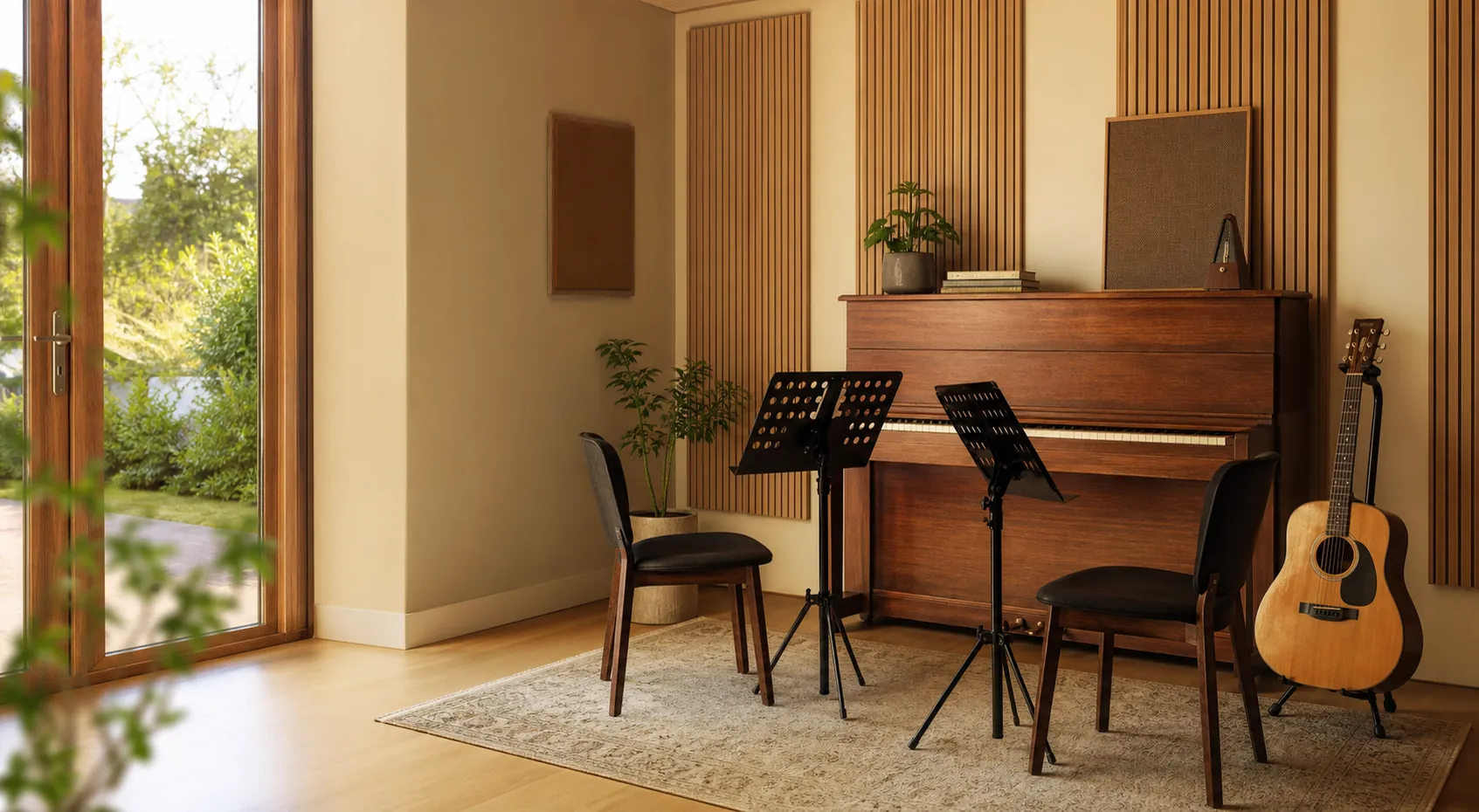
A welcoming garden teaching studio with piano, music stands and guitar

Teaching from home usually starts as a compromise: lessons in a front room or a converted bedroom, pupils and parents coming and going through the house, and a piano or a full drum kit competing for space with everyday family life. A garden studio separates that work from the house properly, with its own door, its own hours and its own acoustic.

We design teaching studios around the pattern of a working teaching day rather than treating them as a smaller version of a performance room. A teacher moving between a nine-year-old's first lesson and a grade eight run-through needs a room that behaves consistently at very different volumes, and pupils and parents need somewhere sensible to wait without walking through the house.

Business use from a residential garden is a genuine planning question, not a formality, and we would rather explain that honestly upfront than let a client find out later.

The acoustic challenge

A teaching studio has to work two ways at once: keeping a pupil's playing from disturbing the house and the neighbours, and keeping the room itself controlled enough that a teacher can hear technique clearly without shouting over the instrument.

Understand acoustic performance
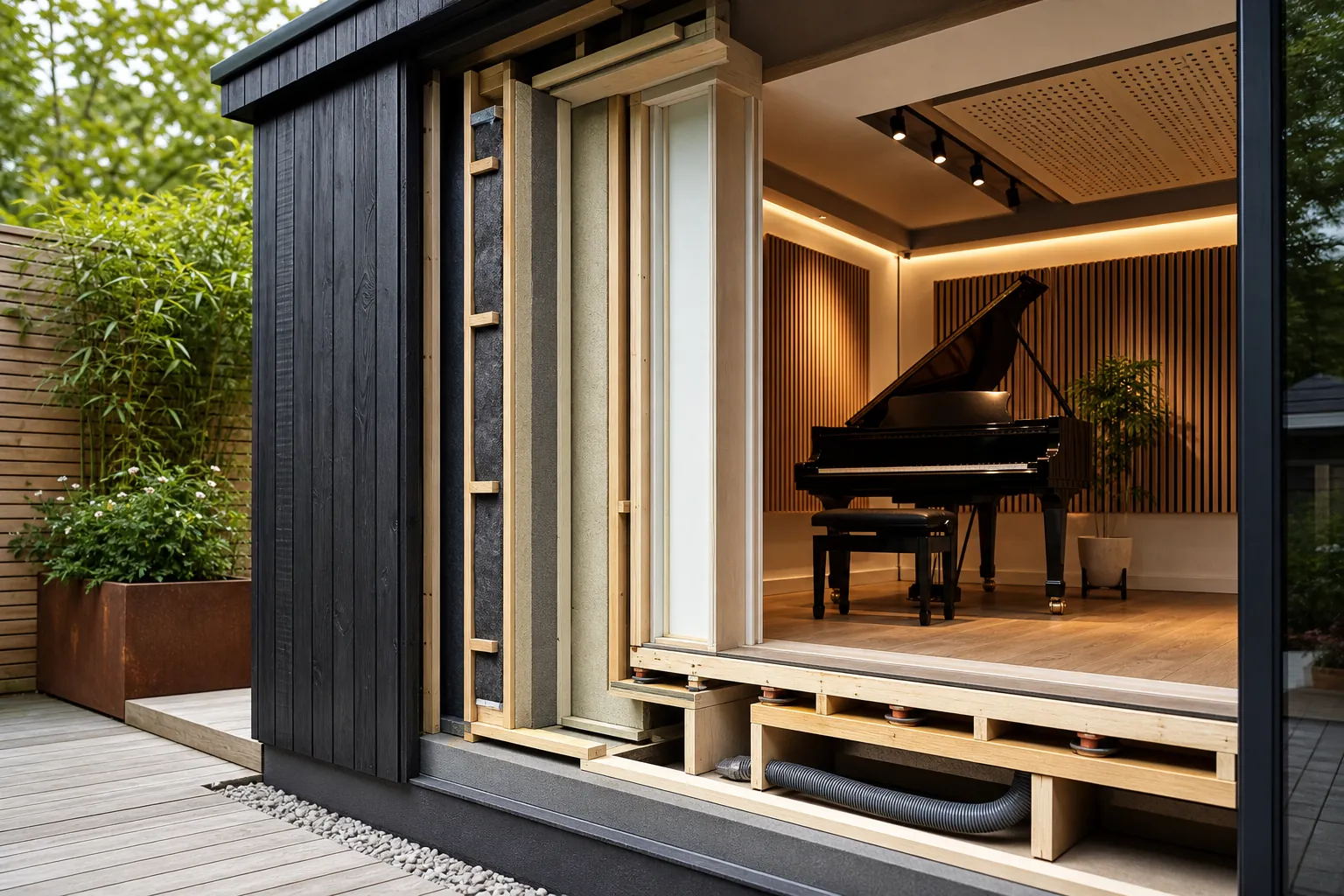
Cutaway view showing the independent inner structure of a soundproof garden studio

Teachers Building A Home Studio

Instrumental and singing teachers building a home base are the main audience: someone who has taught from a spare room or travelled to pupils' houses and wants a proper, dedicated space instead. Piano teachers in particular ask for this often, since a piano is not something you move between rooms week to week.

Peripatetic teachers who currently work across several schools or pupils' homes use a garden studio differently, as a base for the sessions they can bring in-house rather than travel to, which cuts down on transport time and gives them a consistent room and instrument to teach on.

What most teachers share is wanting to separate teaching from the rest of family life: a room a pupil can come to directly, that does not put them through the kitchen or past whoever else is home, and that a teacher can leave set up between lessons rather than clearing away every evening.

Acoustics For Teaching Rather Than Performing

A performance or recording room is usually designed to be as neutral and controlled as possible. A teaching room has a second job: the teacher needs to hear a pupil's tone, timing and technique clearly at close range, without the room itself adding harshness or an unhelpful echo, and without needing to raise their voice to be heard over a piano or a kit.

Containing sound still matters just as much, since lessons often run back to back through a working day and at times that vary by pupil, including evenings and weekends when a garden is otherwise quiet. The acoustic build follows the same room-within-a-room principle as our other studios, sized to the instruments actually being taught rather than a generic specification.

Piano, voice and most orchestral instruments are less demanding on the low end than drums or a bass amp, which generally means a lighter, less expensive acoustic build than a drum or full-band room of the same size, though a piano teaching room still needs proper isolation to be usable at reasonable hours.

Layout, Sightlines And A Working Teaching Day

Room size depends on the instrument: a piano teaching room needs space for an upright or digital piano, two chairs or a piano stool, and enough distance that a teacher can watch hand position properly, while a singing or wind studio needs less floor area but benefits from a slightly higher ceiling.

Sightlines and a sensible waiting arrangement matter more here than on any other studio type we build. A separate entrance from the house, a clear view into the room from wherever a parent waits, and a layout that avoids a pupil being alone with a teacher out of sight are practical choices worth planning in from the start rather than adding later.

Scheduling across a working day also shapes the brief. A teacher running lessons back to back for several hours needs a room that stays comfortable and well ventilated throughout, not just for a single half-hour session, which feeds into the same ventilation thinking we use on our rehearsal rooms.

Teaching From Home And Planning In London

Personal practice in a garden room is generally treated as incidental to living in the house and does not usually raise a planning question on its own. Teaching pupils from home is different, because regular visitors and a commercial element can amount to a material change of use, and that judgement is made case by case rather than against a fixed number of pupils or hours. We would rather flag that honestly at the design stage than let a client assume a threshold that does not actually exist.

Planning permission for a teaching studio therefore depends on how the room will actually be used: an occasional pupil is a different conversation from a full weekly teaching timetable, and the council's view can depend on traffic, parking and the character of the street as much as the room itself.

Flats and maisonettes sit outside permitted development entirely for any garden outbuilding, teaching studio or otherwise, so a full planning application is always the route there regardless of how the room is used.

Building Regulations sit alongside planning permission and are usually a separate, simpler question. A detached single-storey garden studio under 30 square metres is generally exempt from full Building Regulations approval, as set out by LABC, provided it sits far enough from a boundary or uses substantially non-combustible materials, and electrical work still needs to be certified by a registered electrician regardless of that exemption.

Cost Drivers And Your Next Step

Cost is driven mainly by the acoustic build and the instrument it is designed around, so a piano or voice studio is typically a lighter, less expensive build than a drum or full-band room of a similar size. Ventilation for a full teaching day and a separate access route for pupils add to the specification.

A dedicated waiting arrangement, whether that is covered space outside the studio door or a small lobby, is worth budgeting for from the outset rather than treating as an afterthought once the main room is designed.

Tell us what and who you teach, your garden and how your teaching week works, and we will give you an honest view of feasibility, including the planning position, before you commit to anything.

Common questions

The practical details people usually need before deciding whether a garden studio is viable.

Do I need planning permission to teach music lessons from a garden studio?

It depends on how the room is used rather than the room itself. Personal practice in a garden studio is generally treated as incidental to living in the house, but regular pupils visiting for lessons can amount to a material change of use, which councils judge case by case rather than against a fixed number of pupils or hours. We always flag this honestly at the design stage rather than assume a threshold that does not exist.

How many pupils can I teach before it counts as a business?

There is no fixed number written into planning law. Councils assess the scale and pattern of use rather than counting pupils against a threshold, so a single weekly pupil is a very different conversation from a full teaching timetable running most days, and we would rather discuss your actual plan than quote a number that does not exist.

Does a garden teaching studio need its own entrance?

It is not a legal requirement, but it is worth planning in from the start. A separate entrance from the house makes practical sense for scheduling back-to-back lessons and for keeping pupils and parents out of the family home, and it also helps with sensible sightlines for waiting parents.

What size garden studio do I need for piano lessons?

Enough for the piano itself, two chairs or a stool, and enough distance for a teacher to see hand position clearly, which in practice is more floor area than most people expect once the acoustic build is accounted for. A digital piano needs less space than an upright or grand, which can matter on a smaller plot.

Is a garden studio suitable for teaching singing?

Yes, and the acoustic brief is usually lighter than for a piano or drum studio, since voice does not carry the same low-frequency energy. The room still needs proper isolation to be usable through a working teaching day and enough ceiling height that the space does not feel harsh or boxy for sustained notes.

Make the room fit the work.

Tell us what you want to record, how you work, and what your garden allows. We’ll start with the constraints that actually shape the room.

Request an assessment