
London GardenMusic StudiosLondon Garden Music Studios

Garden Rehearsal Rooms

Private garden rehearsal rooms built for full-band volume, backline power and ventilation.

Discuss your studio
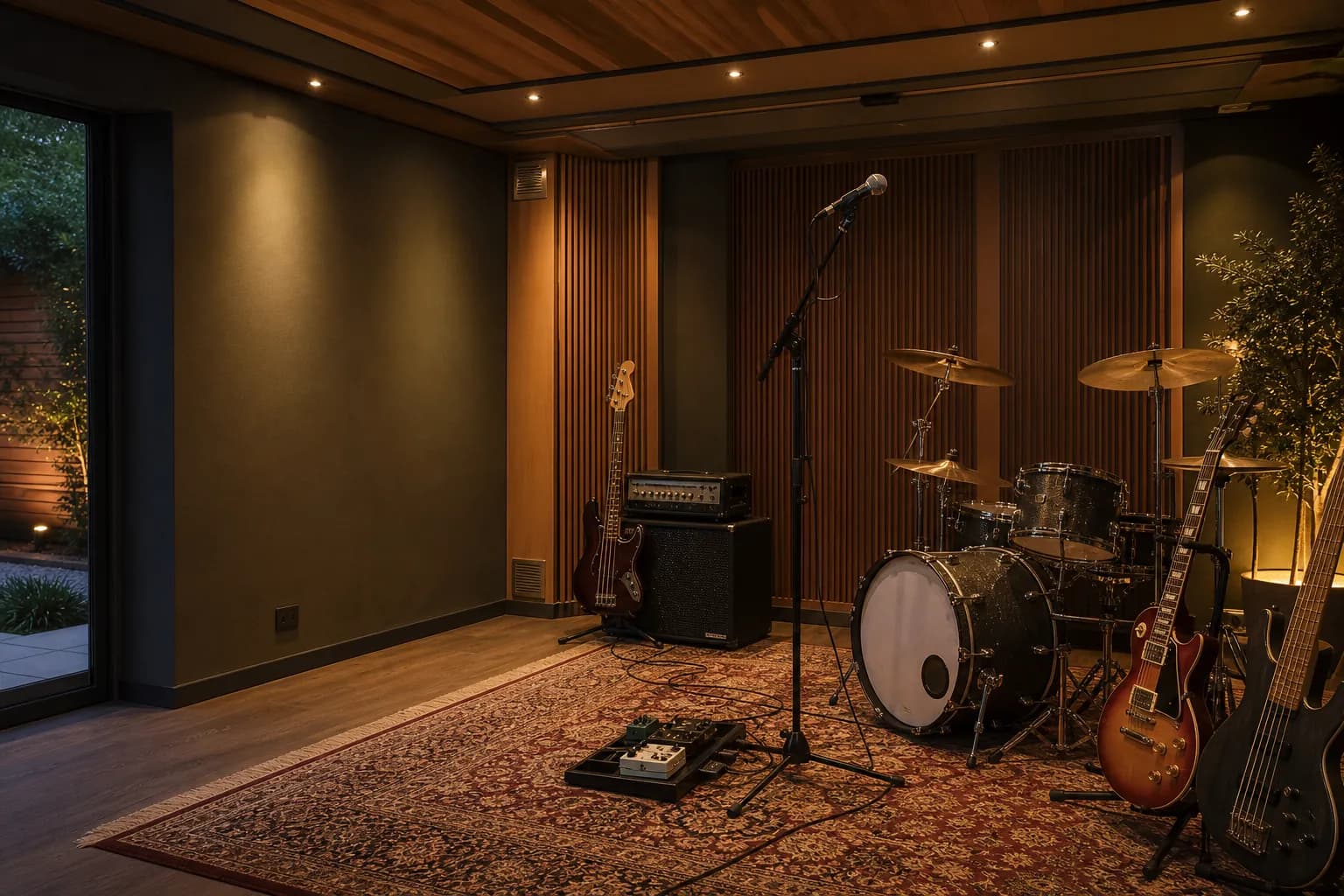
A full band rehearsal setup inside a spacious garden music room

A rehearsal room has to do more than contain one instrument. Put a drummer, a bass amp and two guitar amps in the same space and the combined low-frequency energy is well beyond anything a single musician produces, even before anyone raises the volume for a run-through of the set.

We design garden rehearsal rooms around that combination from the outset: how much floor area a band actually needs, how much power the backline draws, and how a sealed, well-isolated room stays breathable for a couple of hours with the windows shut. A room built for one guitarist practising alone is a different brief from a room built for a band.

Ownership also changes the rehearsal itself. A private garden room removes the clock-watching and the packing-up-and-driving-home that comes with hourly hire, and lets a band leave amps, a kit and a PA set up between sessions rather than reloading a van every week.

The acoustic challenge

A full band brings drums, bass and guitar amps into the same room at once, multiplying both the volume and the low-frequency energy a garden studio has to contain, while several people also need enough air and space to rehearse comfortably for a couple of hours.

Understand acoustic performance
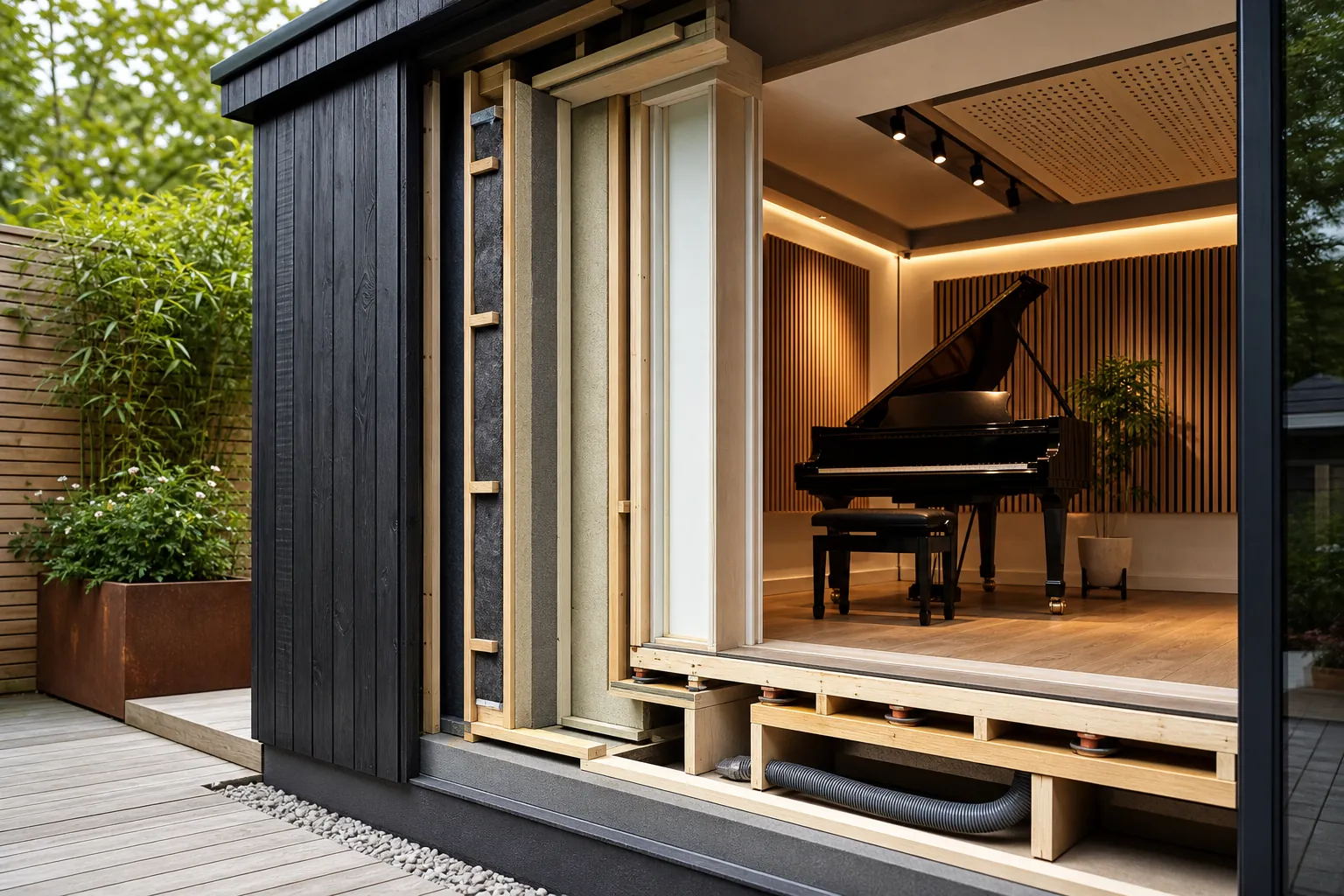
Cutaway view showing the independent inner structure of a soundproof garden studio

Bands, Semi-Pro Players And Songwriters

Bands rehearsing regularly are the core audience: a function band running through a set list before a wedding season, a covers band that plays pubs at weekends, or a group of friends who have played together for years and want somewhere permanent rather than a monthly slot in a hired room.

Semi-pro and working musicians use the same space differently, often booking in shorter, more frequent sessions around other commitments, and songwriters use it for the opposite reason, wanting a quiet, private room to develop material away from a shared house.

What all of them have in common is wanting the room to be theirs: set up how they like it, available on their own schedule, without negotiating a hired room's calendar or packing down at the end of every session.

Full-Band Volume And Our Construction Approach

Several instruments playing together do not simply add up in a predictable way, and a bass amp and a kick drum working at the same time push far more low-frequency energy into a structure than either does alone. Acoustic performance in any build falls fastest exactly in that low range, which is why a rehearsal room needs the same room-within-a-room approach as a dedicated drum room, sized for the whole band rather than one player.

We build an independent inner structure, isolated from the outer shell on floor, walls and ceiling, sealed as airtight as the design allows. The junctions where services, doors and vents pass through the structure matter as much as the walls themselves, since a rigid bridge at any one of those points becomes a route sound takes around the isolation rather than through it.

Sizing that structure correctly from the start matters more for a band room than almost anywhere else, because retrofitting extra isolation into a finished room, after the first loud rehearsal reveals a weak point, is far more disruptive than getting it right in the design.

Space, Power And Ventilation For A Band

Floor area needs to allow for a drum kit, at least two amps, a bass rig and enough space between musicians that nobody is playing into someone else's back. Cramming a band into a room sized for a single player makes the room feel smaller than it is and makes moving equipment in and out awkward every session.

Backline draws more power than people plan for once amps, a PA and lighting are all running together, so the electrical specification needs to be part of the design brief rather than an afterthought once the room is built.

Ventilation is the part most bands underestimate. A sealed, isolated room with five people and running amps heats up and the air quality drops quickly, and mechanical ventilation designed to move air without carrying sound in or out is a core part of the build, not an add-on.

Evening Rehearsals And Neighbour Relations In London

Evening rehearsal is when most bands actually get together, and it is also when a street is quietest and a neighbour is most likely to notice. Noise complaints are not a rare event for London councils: a 2026 CIEH briefing recorded well over 300,000 noise complaints made to English councils in a single year, with several London boroughs among the highest reporting areas.

That is the backdrop a garden rehearsal room is built against, and it is why isolation and honest scheduling matter more here than almost anywhere else we build. A well-isolated room and reasonable finish times do more for a relationship with neighbours than any amount of goodwill after the fact.

How a room is used also affects its planning position. A regular group of the same bandmates rehearsing in a garden room is generally treated the same as any other private use of a garden building. Wider use, such as renting the room out or running paid sessions for people outside the household, is judged case by case and can tip into a different planning category, so it is worth telling us upfront if that is the plan.

Cost Drivers And Your Next Step

Cost is driven by floor area, because a room for four or five people is a bigger structure than a single-player room, and by the acoustic build, since a full room-within-a-room specification for band-level volume costs more than a lighter build for acoustic guitar or vocals.

Access and services add to that: power for a full backline, ventilation sized for several people, and building through a tight side return or other difficult access all affect the final specification.

Tell us about your band, your garden and how the space will be used, and we will give you an honest view of feasibility and the right next step.

Common questions

The practical details people usually need before deciding whether a garden studio is viable.

How many people can rehearse in a garden studio?

Most garden rehearsal rooms are designed for a four or five piece band with a drum kit, two guitar amps and a bass rig, though the exact number depends on the size of garden available. Cramming more people or equipment into a room sized for fewer makes it feel smaller than it is and makes moving gear in and out harder every session.

Do I need planning permission for a band rehearsal room?

Generally not, provided the room stays within permitted development height and coverage limits and the use remains private rehearsal by people connected to the household rather than a separate business. Flats and maisonettes have no permitted development rights for outbuildings, so a garden room at a flat always needs a planning application regardless of use.

Will neighbours be able to hear band rehearsals?

A well-isolated room brings full-band volume down substantially, but no garden building removes sound entirely, particularly the low end from bass and kick drum. Evening rehearsal is when a street is quietest and a neighbour is most likely to notice, so honest scheduling alongside good isolation matters as much as the build itself.

Can bandmates who are not family visit for regular rehearsals?

Yes, a regular group of bandmates rehearsing together is generally treated the same as any other private use of a garden room. Wider use, such as renting the room to other bands or running paid sessions, is judged case by case and can change the planning position, so tell us upfront if that is part of the plan.

What ventilation does a full-band rehearsal room need?

More than people expect. A sealed, isolated room with several people and running amps heats up and the air quality drops quickly, so mechanical ventilation designed to move air without carrying sound in or out needs to be part of the design from the start rather than added afterwards.

Make the room fit the work.

Tell us what you want to record, how you work, and what your garden allows. We’ll start with the constraints that actually shape the room.

Request an assessment